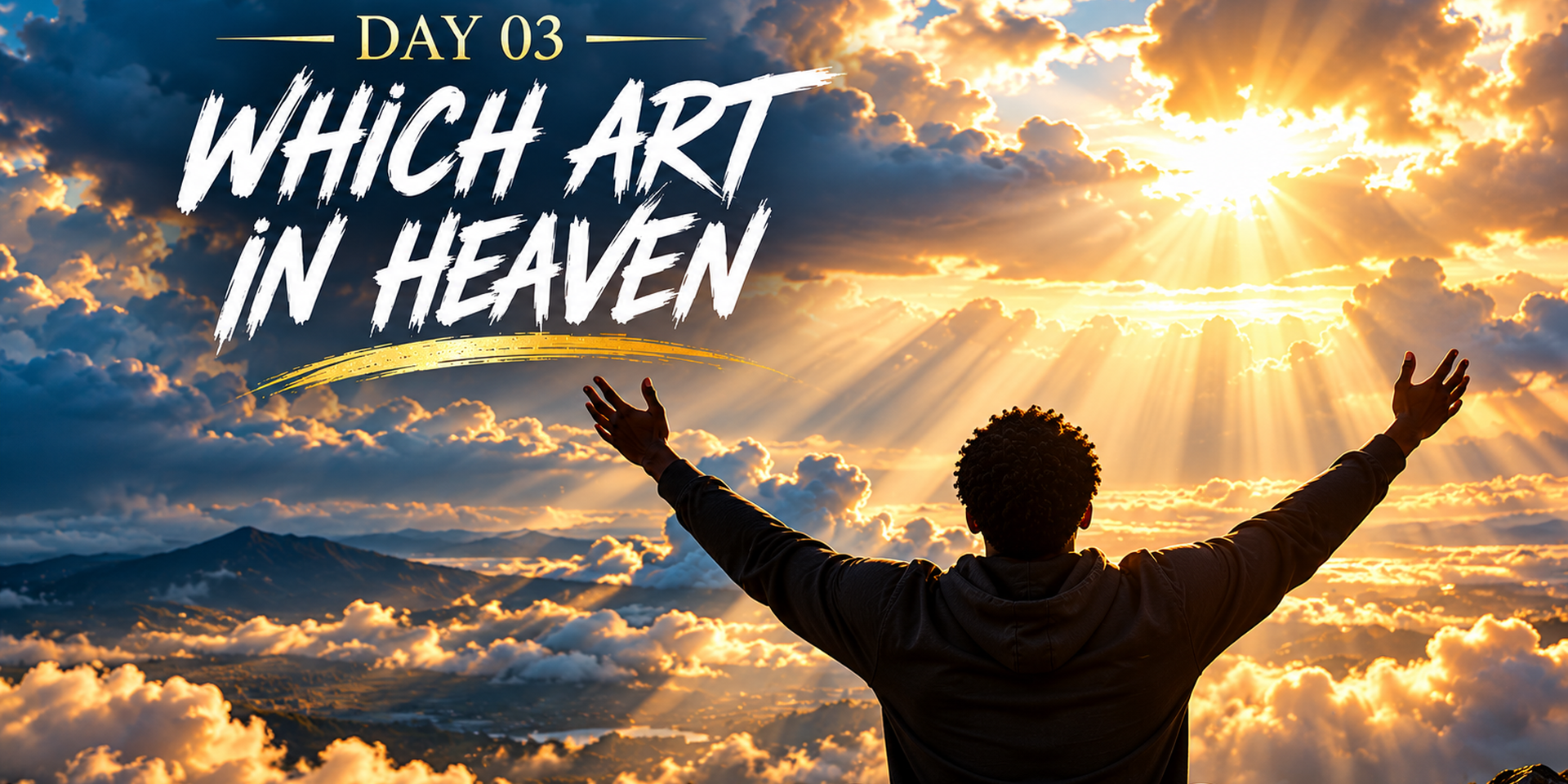
THY KINGDOM COME IS ALSO AVAILABLE NOW ON AMAZON & KINDLE
In 2016, I preached my first sermon at California Worship Center under the leadership of Warryn Campbell.
The message was entitled “Lord, Teach Me How to Fight.”
I opened with Floyd Mayweather.
More specifically, I talked about the brilliance of his defense—how one of the keys to his greatness was not simply his ability to hit his opponent, but his ability not to get hit.
That distinction mattered.
Because winning is important, but so is what you lose in the process of winning.
A great fighter understands that victory is not only about offense. It is also about preservation. It is about knowing when to move, when to cover, when to counter, when to engage, and when not to absorb a blow that never needed to land in the first place.
At the time, it was simply an illustration.
I had no idea that years later I would become the Executive Producer for many of Floyd Mayweather’s exhibition fights.
Life has a way of making old words prophetic.
Over the years, during my tenure as Executive Pastor at California Worship Center, those messages began to form an accidental series of sorts.
Lord, Teach Me How to Fight.
And eventually:
Lord, Teach Me How to Pray, the subtle of this book.
That second message would stay with me much longer than I understood at the time.
Because irrespective of your faith, tradition, denomination, or even your personal conclusions about Christianity, the influence of Jesus on human history is undeniable. His words have shaped civilizations, moral thought, law, culture, charity, philosophy, relationships, and the way billions of people understand God and one another.
And among all the things Jesus taught, there is perhaps no passage more familiar—and more easily overlooked—than the prayer we have come to call The Lord’s Prayer.
Many of us learned it as children.
We memorized it.
We recited it in church.
We said it before meals, during worship services, at funerals, in classrooms, beside hospital beds, and in moments when we simply did not have the words to say.
But the truth is familiarity can hide depth.
We repeat words for years without ever stopping long enough to ask what those words are actually teaching us.
And perhaps that is part of why I am able to write this book now.
I am writing from a season in my life in which I have personally slowed down.
The years of always being the first one to arrive and the last one to leave at work are far behind me. For a long time, so much of my life was defined by movement—building, producing, working, leading, solving problems, caring for people, pursuing the next opportunity and carrying the responsibilities that came with all of it.
But slowing down has given me something that constant movement never could: the opportunity to look back.
I have had time to reflect on my life.
My ministry.
My children.
My relationships.
The people God has placed around me.
The things I got right.
The things I misunderstood.
The things I survived.
The things I built.
And the things I might have seen differently had I slowed down enough to really examine them.
And in many ways, that is exactly what I am doing with the Lord’s Prayer.
I am slowing it down.
A prayer that can be spoken in seconds has become something I have spent years thinking about.
Because sometimes revelation does not come from reading more.
Sometimes it comes from reading slower.
The Lord’s Prayer is more than just a prayer. It is a template. The disciples did not come to Jesus asking for a pray, they asked how to pray.
Jesus was not merely teaching humanity what to say to God, but showing us how life is supposed to be ordered.
Because when you slow the prayer down, something extraordinary begins to emerge.
Every phrase matters.
Every transition matters.
Every pronoun matters.
Every word seems to move us somewhere.
Our.
Father.
Kingdom.
Will.
Earth.
Heaven.
Give.
Us.
Daily.
Bread.
Forgive.
Lead.
Deliver.
Power.
Glory.
These are not random expressions placed next to one another.
They form an architecture. A progression.
A way of understanding God, ourselves, our relationships, our desires, our provision, our responsibility, and ultimately our place within something larger than ourselves.
The prayer tells us something about who God is. But it also tells us something about who we are.
And perhaps even more importantly, it tells us something about who we are supposed to become.
So this devotional is an attempt to do with the Lord’s Prayer what this season of my life has forced me to do with my own life:
slow down and look again.
Not merely verse by verse.
Not merely sentence by sentence.
But, where necessary, word by word.
The Lord’s Prayer contains an order. Before Jesus teaches us to ask for bread, He teaches us to ask for the Kingdom. Before provision comes Kingdom. Before forgiveness comes Kingdom. Before deliverance comes Kingdom. Before asking God to address what is happening around us, Jesus teaches us to address who reigns within us.
“Thy Kingdom come.”
That order matters.
Matthew 6:33 becomes an interpretive key: seek first the Kingdom; provision follows. The prayer is not a collection of unrelated requests. Everything is connected.
Because hidden inside one of the shortest and most familiar prayers ever spoken is an entire vision for human life.
And at the center of that vision is a simple request:
Thy Kingdom come.
Thy Kingdom Come is also available on Amazon and Kindle! Get one, share one.

Related Posts